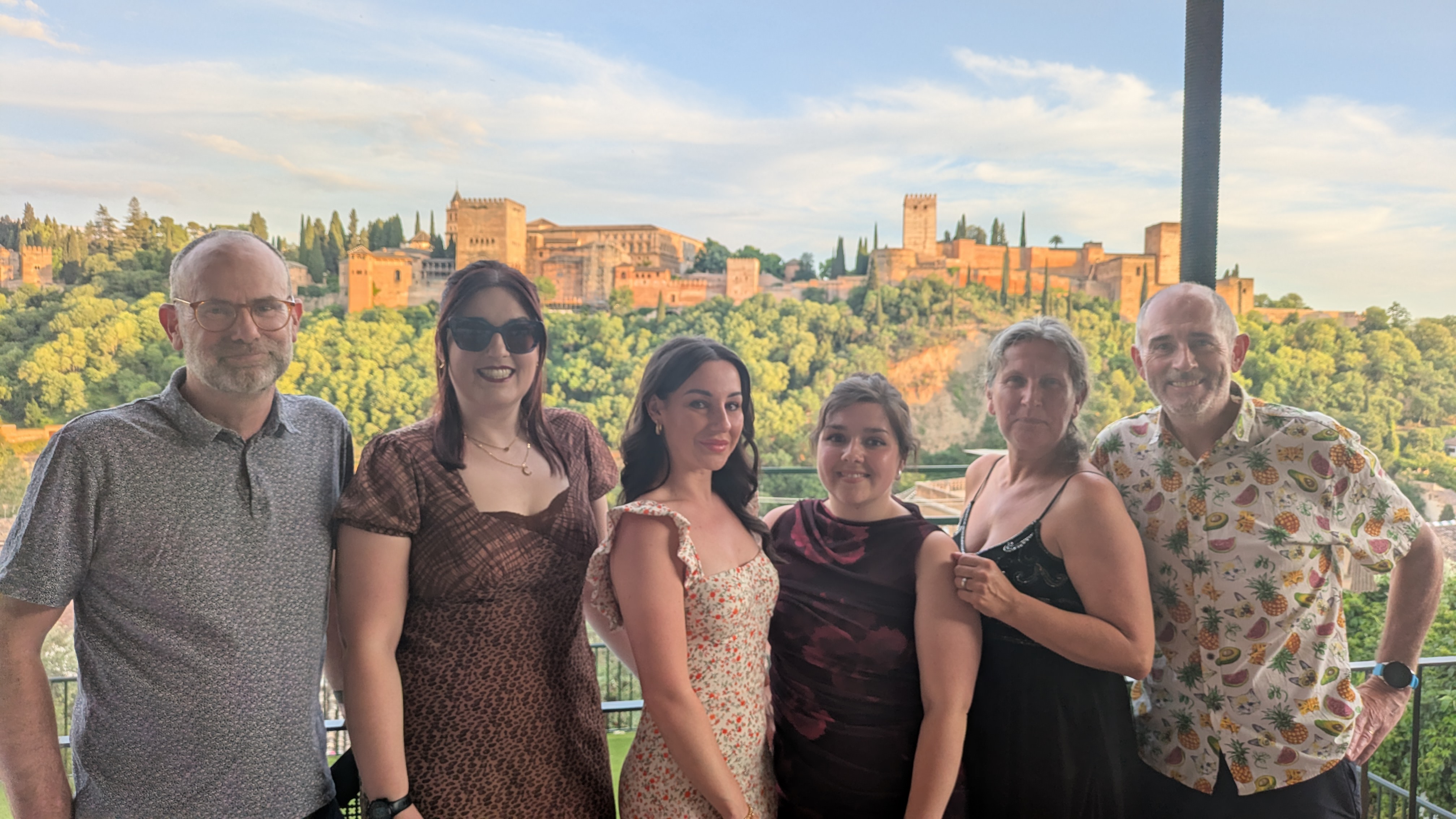

The Atlantic Futures team was proud to be part of the vibrant and thought-provoking third edition of the Digital Mental Health & Wellbeing Conference, held this year in the stunning city of Granada, Spain, and hosted by the Universidad de Granada. This gathering brought together leading researchers, practitioners, and innovators working at the intersection of technology and mental health, with a particular focus on young people’s wellbeing.
Atlantic Futures in Focus
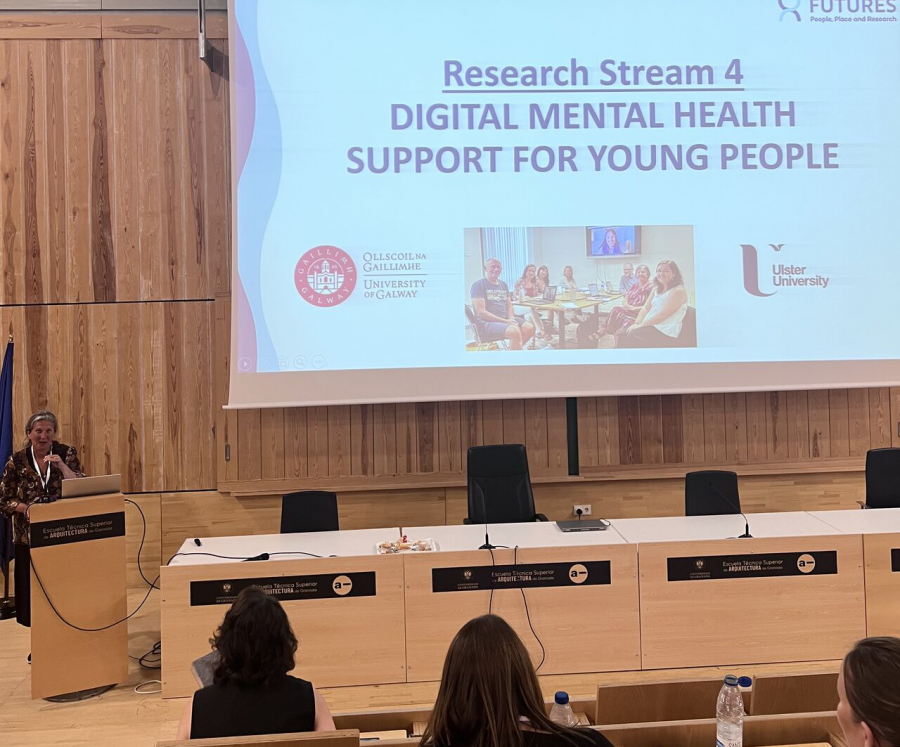
Our team was strongly represented throughout the conference programme, presenting a range of findings from across the Atlantic Futures research agenda. Each presentation highlighted the importance of context-sensitive, evidence-informed approaches to supporting young people’s mental health in an increasingly digital world.

Highlights from our research contributions included:
- Courtney Potts (Ulster University) shared her research on the use and experience of digital mental health supports among young people aged 16–25. Her work emphasised the need for youth-centred design and accessibility in digital interventions and the journal article detailing this work can be accessed here.
- Alba Madrid Cagigal (University of Galway) presented a qualitative study exploring university students' perspectives on engagement with digital mental health interventions, particularly among those experiencing mental health challenges. Her findings pointed to the complex interplay between digital accessibility, personal readiness, and trust in online resources, and detailed in a journal article that can be accessed here.
- Jamie McNulty (Ulster University) delivered an insightful presentation on the relationship between cyberbullying, mental health, and digital help-seeking among neurodivergent young people. Drawing from secondary analysis of the Youth Wellbeing NI survey, her work highlighted the nuanced barriers this group faces in accessing effective digital support.
- Carmen Kealy (University of Galway) discussed co-production research involving marginalised young people in Ireland. Her presentation outlined the process of collaboratively developing digital mental health resources, underscoring the value of participatory research in addressing exclusion and enhancing relevance. Her work is detailed in a journal article that can be accessed here
Representing Atlantic Futures
We were also pleased to be represented at the event by Professor Maurice Mulvenna (Ulster University) who chaired the 1st and 2nd editions of the conference, and Professor Gary Donohoe (University of Galway), both of whom contributed to the wider discussions around future priorities in digital mental health research and policy across the Atlantic region.
Looking Ahead
As the Atlantic Futures team returns from Granada, we do so with renewed inspiration, strengthened partnerships, and valuable insights that will inform the next phase of our work. The conference reinforced our shared commitment to ensuring that digital mental health tools are not only innovative, but also equitable, inclusive, and grounded in the lived experiences of young people.
We extend our sincere thanks to Pneuma Healthcare, Ulster University, Crystal Project EU, and the Universidad de Granada for sponsoring and supporting this impactful event.
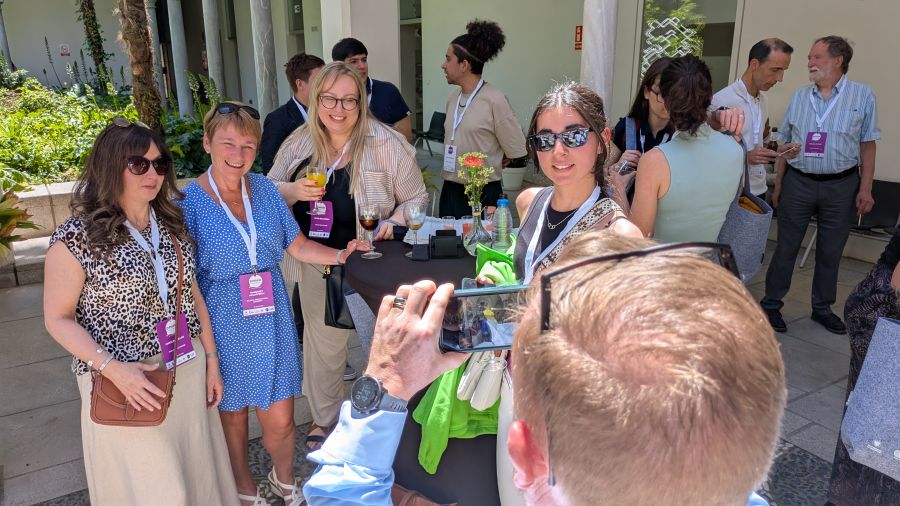
We are also grateful to colleagues and collaborators who made the experience so memorable and meaningful, including Oisin Harkin, Sophy McFarlane, James Sweeney, Colin Gorman, Margaret McLafferty, Zoraida Callejas, and Ciaran Murray.
We look forward to sharing further updates as we continue to explore how digital innovation can shape the future of youth mental health across the Atlantic region.
Atlantic Futures is funded by Higher Education Authority as part of the North South Research Programme